
NEET-UG goes digital in 2027: what the world’s largest CBT transition must get right
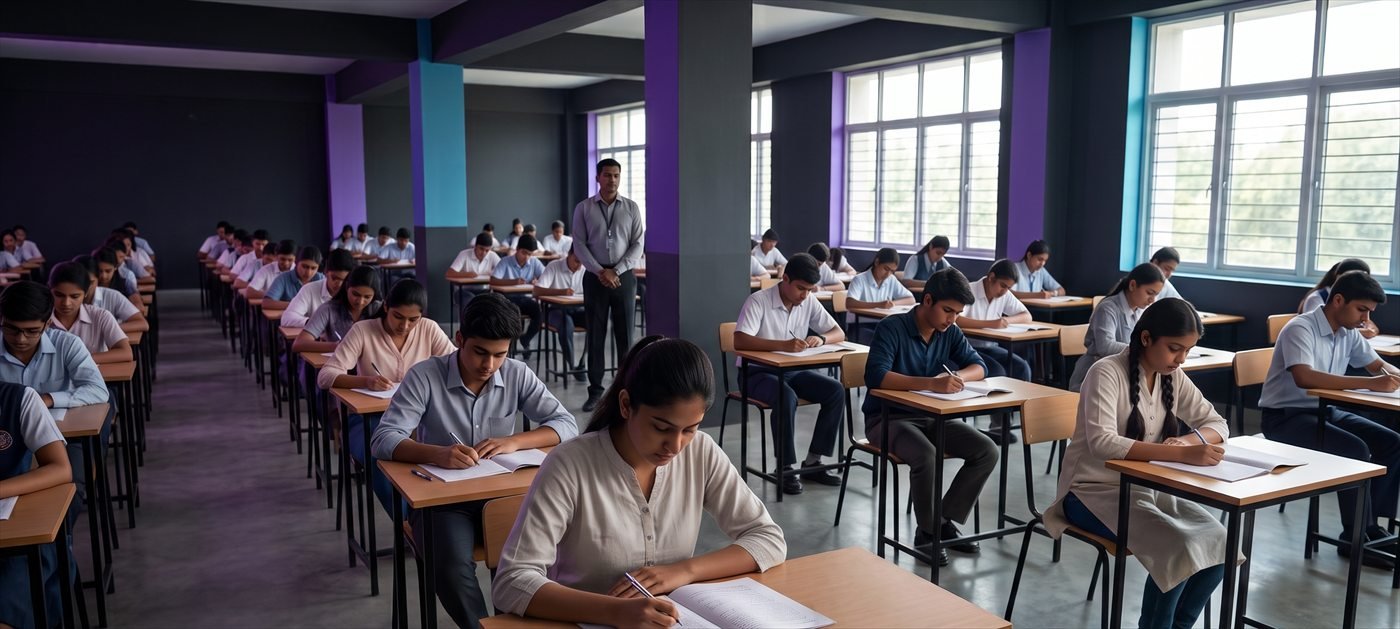
On 15 May 2026, after the NEET-UG paper-leak crisis forced a nationwide re-test, Education Minister Dharmendra Pradhan announced that NEET-UG will move to CBT (Computer-Based Testing) from 2027, calling the OMR (Optical Mark Recognition) system “the root cause” of the exam’s vulnerability.
Two weeks later, the NTA (National Testing Agency) told the Supreme Court, in a sworn affidavit, that the high-level committee had recommended not just the move to CBT, but “the introduction of multi-session and multi-stage testing.” Reports since suggest the working plan is an exam conducted over five to six days, at roughly 1,000 centres across about 500 cities, with around five lakh candidates writing per day.
For the twenty-two lakh families whose futures ride on this exam, one question matters: does going digital actually fix what broke?
In short
- Computer-based testing removes the printed paper — and with it, the exact failure that broke NEET-UG 2026.
- It does not remove malpractice. India’s largest CBT agency says the threats simply moved to remote answering and technical hacks.
- A digital paper still travels. Every hop is the new strongroom.
What CBT genuinely fixes
A computer-based exam eliminates the printed question paper as a physical object — no printing press, no transport van, no strongroom, no envelope that can be opened the night before. The specific failure that destroyed NEET-UG 2026 becomes structurally impossible in that form.
What CBT does not fix — and what it newly creates
The country has already run this experiment at scale, and the results deserve honest reading. In May 2026, during the SSC (Staff Selection Commission) GD constable examination — a fully computer-based exam for nearly 46 lakh candidates — centres in Prayagraj, Kanpur and Muzaffarpur saw server failures, terminal shutdowns, cancellations and re-scheduling chaos. The SSC’s chairman was candid about the cause:
“The biggest threats for our exams are remote answering and technical hacks.”
Chairman, Staff Selection Commission · May 2026
Read that carefully. The head of India’s largest CBT-conducting agency is saying that the digital exam did not end malpractice — it relocated it. The paper no longer leaks from a strongroom; instead, someone tries to answer it remotely through a compromised terminal.
A digital question paper still makes a journey — from the authority’s server to thousands of exam-centre machines. Every hop in that journey is the new strongroom. If the delivery chain depends on the internet, it inherits the internet’s attack surface.
The three tests of a trustworthy transition
Custody, end to end
The question paper — now a file — must be encrypted from the moment it leaves the examination authority and must become readable only at the exam desk, at the exam hour. Nobody in between, including centre operators and network administrators, should ever hold a readable copy.
Independence from the network
An exam that requires live internet connectivity at the centre can be stopped by an outage and attacked through the connection. Offline-first administration removes both failure modes at once.
Fairness across sessions
A multi-day, multi-session exam raises the normalisation question — the Supreme Court, in its May 2025 NEET-PG order, was sharply skeptical of routine score normalisation across shifts. A pre-defined, transparent normalisation method is a stated part of the committee’s recommendation; publishing it before the exam, not after, will decide whether families trust the ranks it produces.
The 2027 transition is the right decision. Whether it restores trust depends entirely on whether the new system is engineered against the threats the SSC chairman has already named — not just the threats of the OMR era.